Watching your cat recover after an operation can bring relief, but it can also raise questions. Is extra sleeping expected? Should the incision look slightly swollen? When should your cat start eating and moving around normally again? Understanding the recovery process helps you recognize reassuring signs of healing and identify changes that deserve veterinary attention.
For cat owners in Indianapolis, knowing what to expect after cat surgery can make post-operative care more manageable. Healing does not look exactly the same for every cat. The procedure performed, your cat’s age, overall health, and prescribed medications all influence recovery. 30th Street Animal Hospital can help you understand your cat’s discharge instructions and monitor progress as your pet returns to normal routines.
What Happens During the First 24 Hours After Surgery?
During the first day at home, your cat may be sleepier than usual, less interested in food, or reluctant to move around. These changes can occur as the effects of anesthesia wear off and your cat adjusts to being home. Some cats may also appear slightly unsteady or quieter than normal for a limited period.
Prepare a calm, comfortable recovery area with clean bedding, fresh water, and easy access to a litter box. Keep your cat indoors and prevent jumping onto furniture or climbing stairs if the veterinarian has restricted activity.
Follow the discharge instructions about when to offer food and water. Your cat may need small portions or a specific feeding schedule, depending on the procedure. Do not force food or water if your cat is drowsy or unable to swallow comfortably.
Although temporary tiredness may be expected, your cat should gradually become more alert according to the recovery guidance provided by the veterinary team. Contact the clinic if your cat’s condition worsens, remains unusually unresponsive, or differs significantly from the instructions you received.
How Should a Healing Surgical Incision Look?
The appearance of the incision is one of the most important things to monitor after veterinary surgery. A healing incision is generally closed, with the edges staying together. Depending on the procedure and how recently it was performed, you may notice mild bruising, slight swelling, or a small amount of redness near the incision.
The expected appearance varies with the type of surgery, closure method, and individual healing response. Some incisions have visible stitches or staples, while others are closed beneath the skin. Your veterinarian can explain what is normal for your cat’s specific procedure.
Check the incision as directed, preferably at consistent times each day. Look for changes without pressing, pulling, or repeatedly touching the area. Taking a clear photograph may help you compare its appearance over time, provided your cat can be checked without stress.
Contact your veterinarian if redness or swelling increases, the incision begins to separate, discharge appears, bleeding continues, or the area develops an unpleasant odor. Do not apply creams, antiseptics, or home remedies unless your veterinary team specifically recommends them.
When Will Your Cat Start Eating Normally?
Appetite can fluctuate during the early recovery period. Anesthesia, stress, nausea, discomfort, and some medications may temporarily make food less appealing. Your cat may eat a smaller portion than usual before gradually returning to their normal routine.
Offer the food recommended by your veterinarian in a quiet setting. If your cat has been prescribed a special diet, follow those instructions rather than switching foods independently. Keep food and water within easy reach so your cat does not need to jump or walk far.
Monitor how much your cat eats and drinks. A cat that refuses food should not simply be left to wait for several days. Contact your veterinarian promptly if your cat will not eat within the timeframe provided in the discharge instructions, especially if they have an existing health condition.
Repeated vomiting, difficulty drinking, marked weakness, or worsening lethargy alongside appetite loss also warrants veterinary advice. Early communication helps the veterinary team decide whether your cat needs an examination or adjustments to the recovery plan.
What Changes in Movement and Behavior Are Expected?
Your cat may spend more time sleeping, seek a quiet hiding place, or show less interest in play during recovery. Some cats become unusually affectionate, while others prefer limited interaction. These differences may reflect stress, tiredness, or temporary discomfort.
Movement should improve gradually in line with your veterinarian’s guidance. However, appearing energetic does not necessarily mean your cat is ready to resume normal activity. Running, jumping, rough play, and climbing can place stress on healing tissues, even when the incision looks fine.
Restrict activity for the period recommended by the veterinary team. Keep your cat away from elevated furniture and separate them from other pets if chasing or wrestling is likely. Offer calm companionship without forcing interaction.
Watch for signs that may indicate discomfort, including a hunched posture, reluctance to walk, growling when approached, unusual hiding, or persistent restlessness. If behavior becomes more concerning instead of gradually improving, contact your veterinarian for guidance.
How Should You Manage Pain and Prescribed Medication?
Pain management supports a more comfortable recovery. Your veterinarian may prescribe medication based on the procedure and your cat’s individual needs. Give each medicine according to the instructions, including the correct dose, timing, and any directions about food.
A written medication schedule can help prevent missed or duplicated doses. If your cat spits out medication, vomits after receiving it, or seems more uncomfortable than expected, ask the veterinary team what to do before repeating a dose or changing the schedule.
Never give human pain relievers or leftover medication intended for another animal. Some common human medicines are highly toxic to cats.
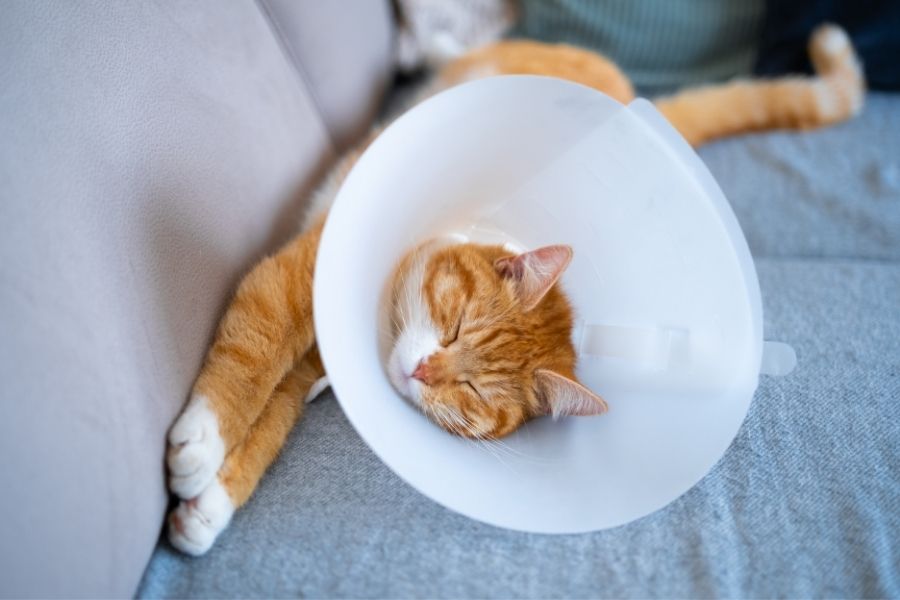
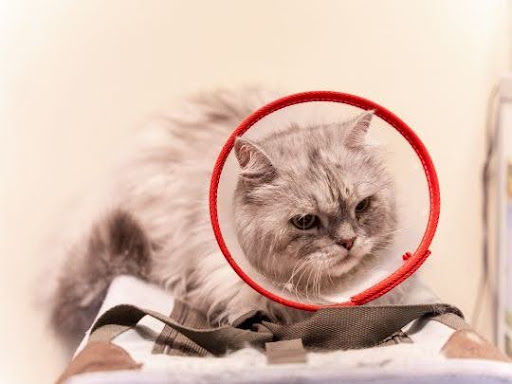
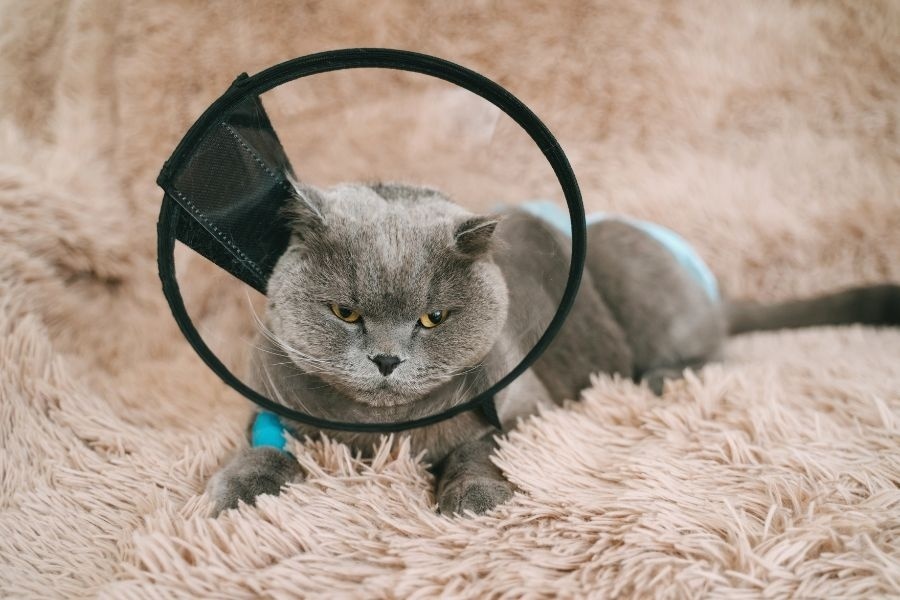
Your cat may also need a protective collar or recovery garment to prevent licking and chewing at the incision. Make sure the device fits correctly and does not interfere with eating, drinking, breathing, or resting. If your cat repeatedly removes it or cannot manage comfortably, ask your veterinarian about suitable alternatives.
How Long Does Recovery Usually Take?
Recovery time depends on the type and extent of the operation. A straightforward procedure may involve a relatively short recovery period, while abdominal, orthopedic, or more complex surgery may require several weeks of restricted activity and monitoring.
Skin can appear to heal before deeper tissues have fully recovered. For this reason, a closed incision does not automatically mean that your cat can jump, run, or return to outdoor activity.
Attend recommended follow-up appointments so the veterinary team can assess healing and advise when restrictions can be relaxed. If stitches or staples need removal, follow the scheduled timing provided by the clinic. Do not remove them yourself.
The goal of pet surgical services is not only to complete the procedure but also to support safe recovery through appropriate instructions, monitoring, and follow-up care. Every cat heals at an individual pace, so avoid comparing your pet’s progress with another cat’s experience.
Warning Signs That Are Not Part of Normal Healing
Some mild changes may be expected after an operation, but certain symptoms should never be ignored. Contact your veterinarian promptly if you notice worsening pain, increasing swelling, persistent vomiting, refusal to eat beyond the advised timeframe, or a sudden decline in activity.
Significant bleeding, an incision that opens, difficulty breathing, collapse, or a sudden loss of responsiveness requires immediate veterinary attention. Do not wait for a routine appointment if serious symptoms occur.
Keep a record of your cat’s appetite, drinking, medication schedule, behavior, and incision appearance. Sharing these details with the veterinary team can help them understand whether recovery is progressing as expected.
Support Your Cat’s Recovery With 30th Street Animal Hospital
Normal healing involves gradual improvement, appropriate rest, and an incision that remains closed without worsening signs of inflammation. Monitoring your cat each day helps you notice changes early, while following veterinary instructions reduces the risk of disrupting the healing process.
If you have questions about your cat’s recovery after surgery, contact 30th Street Animal Hospital in Indianapolis. Schedule an appointment or consultation to discuss incision care, medication, activity restrictions, and follow-up needs. The veterinary team can help you understand what is expected for your cat’s procedure and when a change deserves professional attention.
Frequently Asked Questions
Q1. Is mild swelling around my cat’s incision normal after surgery?
Ans: Mild swelling or bruising may occur after some procedures, but the expected appearance varies. Monitor the incision as instructed and contact your veterinarian if swelling increases, redness spreads, discharge appears, or the incision starts to open.
Q2. How much should my cat sleep after surgery?
Ans: Your cat may sleep more than usual during early recovery as the effects of anesthesia wear off. They should gradually become more alert according to the discharge instructions. Contact your veterinarian if your cat becomes increasingly weak or unusually difficult to wake.
Q3. Can my cat lick the incision if it looks healed?
Ans: No. Licking and chewing can irritate the surgical site or introduce bacteria, even if the incision appears closed. Use the protective equipment recommended by your veterinarian until you are told it is safe to stop.
Q4. When can my cat return to jumping and normal play?
Ans: The timing depends on the procedure and healing progress. Follow the activity restrictions provided by your veterinarian and wait for approval before allowing vigorous play, climbing, or jumping.
Q5. What should I do if my cat’s recovery seems to be getting worse?
Ans: Contact your veterinary team promptly if your cat develops worsening pain, increasing swelling, persistent vomiting, appetite loss, or unusual weakness. Seek immediate veterinary attention for difficulty breathing, collapse, significant bleeding, or an open incision.