Limited-Time September Special: Save $150 on Pet Dental Cleaning + $50 Off Pre-Op Diagnostics

10 Things to Do After Your Pet Comes Home From Surgery
Bringing your pet home after surgery can feel like a major relief. However, the recovery period is just as important as the procedure itself. Dogs and cats may act differently after anesthesia, pain medication, or a surgical procedure. They may sleep more, eat less, move slowly, or seem unusually quiet during the first part of recovery. Knowing what to do at home can help support healing and reduce the chance of complications.
If your pet recently received veterinary surgery, follow the instructions provided by your veterinary team closely. Every procedure is different, so your pets activity, medication schedule, food intake, incision care, and exercise limits should be managed according to the specific discharge plan.
Here are 10 practical steps to help your pet recover comfortably at home.
1. Create a Quiet Recovery Space
Your pet needs a calm place to rest after surgery. Choose an area away from heavy household traffic, loud sounds, children, and other pets. A comfortable bed with easy access to water can make resting easier.
For dogs, use a secure indoor area where movement can be limited. For cats, a quiet room can help prevent climbing, jumping, and excessive activity.
A peaceful recovery space is especially useful during the first few days when your pet may be tired or disoriented.
2. Follow the Medication Instructions
Your veterinarian may prescribe medication to support comfort and recovery. Give each medication exactly as directed. Follow the recommended dose, timing, and duration.
Never give your pet human pain medication unless your veterinarian specifically instructs you to do so. Some medications that are safe for people can be dangerous for dogs and cats.
Keeping a simple medication schedule can help prevent missed or repeated doses. You can also keep all prescribed medications in one secure location away from children and pets.
3. Keep the Surgical Area Clean and Protected
The incision requires careful attention during recovery. Check the area regularly for changes such as increasing redness, swelling, discharge, bleeding, or unusual odor.
Do not apply creams, cleaning products, or other substances to the incision unless your veterinary team recommends them.
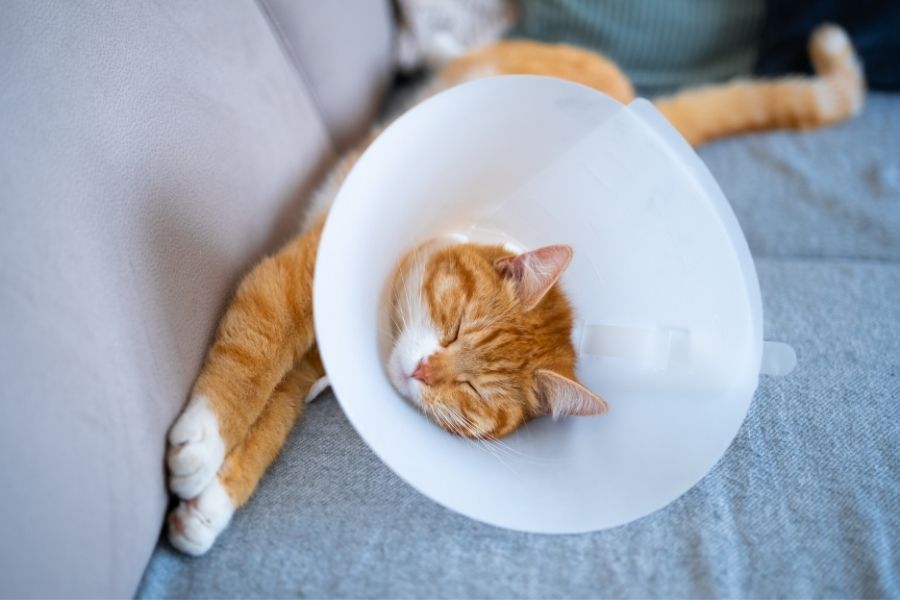
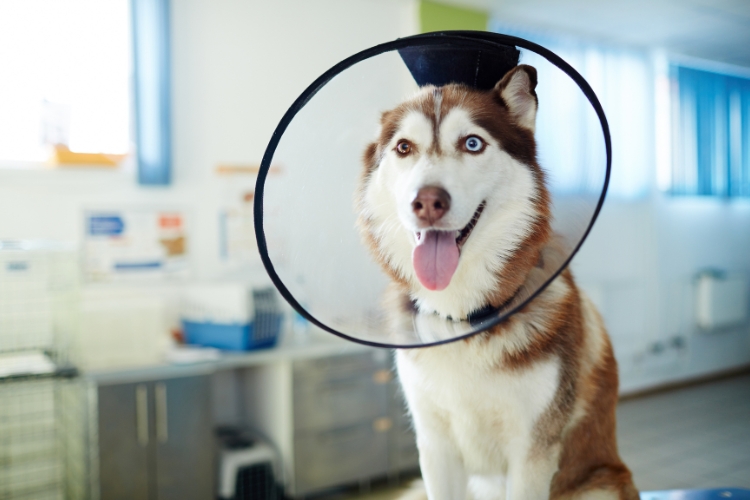
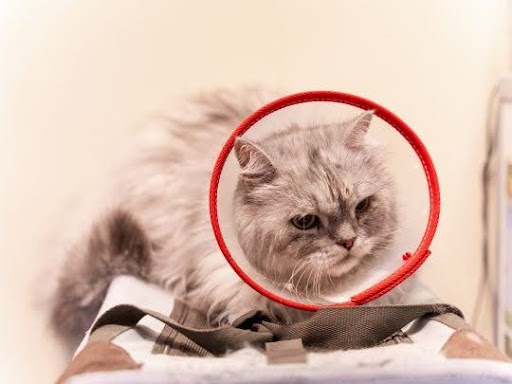
Your pet may naturally want to lick or scratch the surgical area. Excessive attention to the incision can interfere with healing. If your veterinarian provides a protective collar or recovery garment, use it according to the discharge instructions.
4. Limit Running, Jumping, and Rough Play
Your pet may feel better before the surgical site has fully healed. This can create a challenge because normal activity may return quickly while the body still needs time to recover.
Restrict running, jumping, stairs, rough play, and other strenuous activities when instructed. Dogs may need short, controlled leash walks for bathroom breaks rather than normal outdoor exercise.
Cats can be particularly difficult to restrict because they naturally climb and jump. Keep them in a controlled area if necessary and remove access to high furniture during the recovery period.
5. Monitor Food and Water Intake
Changes in appetite can occur after surgery. Your pet may not immediately want a full meal, especially during the first hours at home.
Offer food and water according to your discharge instructions. Avoid suddenly introducing new foods or giving large meals unless instructed by your veterinary team.
Pay attention to how much your pet drinks and eats. A continuing lack of appetite, repeated vomiting, difficulty drinking, or other concerning changes should be discussed with your veterinary clinic.
Keeping track of food and water intake can give you useful information if you need to speak with the veterinary team.
6. Watch Your Pet Behavior
Behavior can provide important clues during recovery. Your pet may sleep more than usual or seem quieter during the initial recovery period.
At the same time, watch for unusual behaviors such as persistent restlessness, inability to settle, hiding, vocalization, reluctance to move, or significant changes in normal interaction.
Cats may hide when they feel uncomfortable, while dogs may become unusually withdrawn or restless. Changes in normal behavior are worth noting because pets cannot directly tell you how they feel.
7. Prevent Your Pet From Licking or Chewing the Incision
Licking may seem harmless, but repeated licking can irritate healing tissue. Chewing can cause even more disruption to the surgical area.
Check your pet regularly, especially when they are unsupervised. If your pet repeatedly tries to reach the incision, contact the veterinary team for guidance about protective options.
Do not assume that a few minutes of licking is harmless. Consistent protection can be an important part of surgical care.
8. Keep Follow Up Appointments
Follow up visits allow the veterinary team to assess healing and determine whether your pet can gradually return to normal activity.
Depending on the procedure, your pet may need an incision check, suture removal, additional monitoring, or changes to the recovery plan.
Even if your pet appears completely normal, do not skip a recommended follow up appointment without discussing it with the clinic. Some aspects of healing cannot be evaluated simply by watching your pet at home.
9. Watch for Changes That Need Veterinary Attention
Knowing what is normal for your pet makes it easier to recognize something that seems unusual.
Contact your veterinary team if you notice significant swelling, persistent bleeding, discharge from the incision, worsening redness, repeated vomiting, severe weakness, breathing difficulty, inability to urinate, or other concerning changes.
Your discharge instructions should always take priority because they are tailored to your pets specific procedure.
If you are uncertain about something during recovery, contacting the veterinary team is safer than trying to diagnose the issue yourself.
10. Give Your Pet Time to Recover
Recovery does not happen at exactly the same speed for every pet. Some animals become active quickly, while others need more time to return to their normal routines.
Give your pet plenty of rest and keep the recovery environment predictable. Continue following exercise restrictions, medication instructions, feeding recommendations, and incision care guidelines.
Positive attention can also help your pet feel secure. Gentle interaction, quiet companionship, and a comfortable resting area can make the recovery period easier.
The goal is not simply to get your pet moving normally again. The goal is to allow the body enough time to heal properly.
Supporting a Smooth Recovery With Veterinary Surgery
Good home care is an important part of the overall surgical process. Veterinary pet surgery does not end when your pet leaves the clinic. Recovery continues through careful monitoring, appropriate activity restrictions, medication management, nutrition, and follow up care.
Pet owners can make a major difference by paying attention to small changes and following professional instructions consistently. If your pet has undergone a pet surgical service, keep the discharge instructions available and do not hesitate to contact the veterinary team when something does not seem right.
With patience and attentive care, many pets can gradually return to their familiar routines after surgery.
Schedule Follow Up Surgical Care
If your pet has recently undergone surgery or you are preparing for a planned procedure, 30th Street Animal Hospital can help guide you through the recovery process. Schedule an appointment online to discuss your pets surgical care, recovery progress, activity restrictions, or any changes you have noticed at home. Consistent veterinary guidance can help make the recovery period more comfortable and organized for both you and your pet.
FAQ
Q1. How long should my pet rest after surgery?
Ans: Recovery time depends on the type of procedure, your pets age, overall condition, and healing progress. Follow the activity restrictions provided by your veterinary team and gradually return to normal activity only when instructed.
Q2. Is it normal for my pet to sleep more after surgery?
Ans: Increased sleepiness can occur after surgery, particularly during the initial recovery period. Your pet should still be monitored for significant weakness, unusual behavior, breathing changes, or other concerning symptoms.
Q3. How can I stop my pet from licking the surgical incision?
Ans: Follow your veterinary teams recommendations for protecting the incision. A protective collar or recovery garment may be appropriate depending on the procedure and location of the surgical site.
Q4. When should I contact the veterinarian after my pets surgery?
Ans: Contact your veterinary team if you notice concerning changes such as persistent bleeding, significant swelling, discharge, worsening redness, repeated vomiting, severe weakness, breathing difficulty, or other unexpected symptoms.
Q5. Can my pet return to normal exercise immediately after surgery?
Ans: Most pets need temporary activity restrictions after surgery. Running, jumping, rough play, and other strenuous activities may need to be limited until healing has progressed sufficiently. Follow the specific instructions provided for your pets procedure.