Limited-Time September Special: Save $150 on Pet Dental Cleaning + $50 Off Pre-Op Diagnostics

Feline Stomatitis Explained: Managing Severe Mouth Inflammation in Cats
A cat that suddenly stops grooming, eats differently, drools more than usual, or becomes reluctant to have its face touched may be dealing with significant oral discomfort. Feline stomatitis is one condition that can make everyday activities such as eating and grooming extremely painful.
Feline stomatitis is a severe inflammatory condition affecting the mouth. In many cats, the immune system reacts excessively to plaque and oral bacteria, creating intense inflammation around the gums and other tissues inside the mouth. Understanding the condition can help owners recognize changes early and seek appropriate veterinary care.
What Is Feline Stomatitis?
Feline stomatitis, often called feline chronic gingivostomatitis, involves widespread inflammation inside a cat’s mouth. Unlike mild gum irritation that may affect only a small area, stomatitis can involve the gums, cheeks, tongue, and tissues toward the back of the mouth.
The inflammation can become red, swollen, ulcerated, and extremely uncomfortable.
The exact cause is not always straightforward. The immune system appears to play a major role, particularly when it reacts strongly to plaque and bacteria around the teeth. Other oral and health factors may also influence an individual cat’s risk.
Because the condition can progress gradually, some owners may initially mistake the changes for picky eating or normal aging.
Signs That Your Cat May Have Stomatitis
Cats are skilled at hiding discomfort. A cat with severe oral inflammation may continue eating while changing how it eats.
Watch for changes such as:
- Drooling more than usual
- Bad breath
- Red or swollen gums
- Bleeding from the mouth
- Difficulty chewing
- Dropping food while eating
- Walking away from food
- Preferring soft food
- Pawing at the mouth
- Rubbing the face against objects
- Reduced grooming
- Weight loss
- Irritability or withdrawal
- Difficulty opening the mouth
Some cats become noticeably less social because they associate handling around the face with discomfort.
A change in behavior can sometimes be one of the earliest clues. If a normally affectionate cat begins avoiding touch around the head, an oral examination may be worthwhile.
Why Stomatitis Can Become So Painful
Inflamed oral tissues can be highly sensitive. Every bite of food can press against irritated gums, while grooming can move the lips and cheeks against painful areas.
Plaque can continue to trigger inflammation, creating a difficult cycle. More plaque may contribute to more immune activity, which can result in worsening tissue inflammation.
This is one reason pet dental care should not focus only on visible tartar. A cat’s mouth needs to be evaluated as a whole, including areas that are difficult for an owner to see at home.
Cats with severe inflammation may also struggle to eat enough calories. Weight loss can follow, especially when eating becomes consistently uncomfortable.
How Veterinarians Evaluate Feline Stomatitis
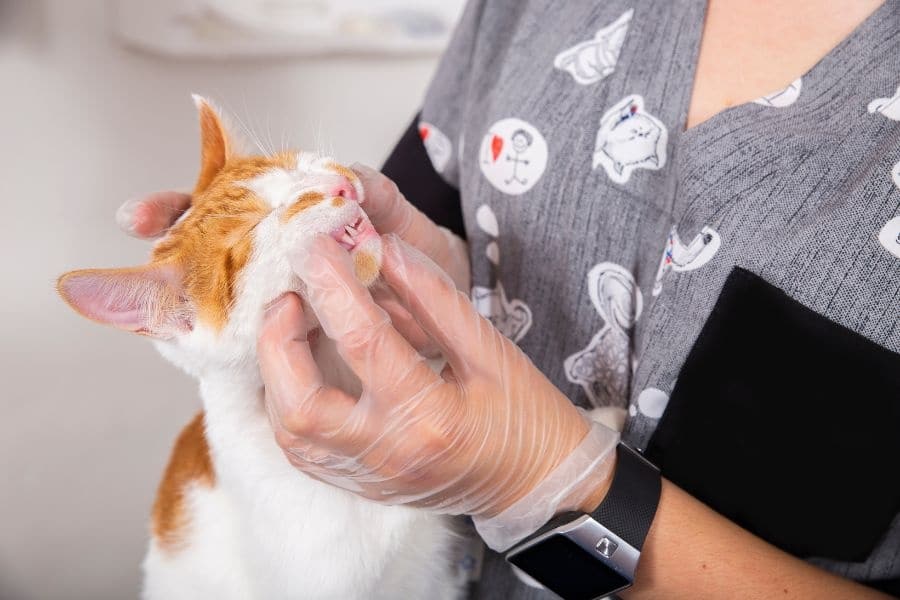
A thorough oral examination is an important starting point. The veterinary team may look for gum inflammation, ulcers, damaged teeth, plaque accumulation, and inflammation farther inside the mouth.
Depending on the cat’s condition, additional diagnostic testing may be recommended.
Dental imaging can be particularly useful because some painful tooth problems occur beneath the gumline. Imaging allows the veterinary team to evaluate tooth roots and surrounding structures that cannot be assessed through a simple visual inspection.
The overall goal is to understand how extensive the inflammation is and determine which treatment approach may provide meaningful relief.
Medical Management and Daily Oral Care
Treatment depends on the severity of the condition and the individual cat.
Some cats may benefit from medical management designed to control inflammation and support oral comfort. Dental care may also be recommended to reduce plaque and address affected teeth.
At home, owners should follow the veterinary team’s instructions carefully. Cats with painful mouths should not be forced into brushing or other oral routines without professional guidance. Handling an already painful mouth can increase stress and may make future oral care more difficult.
Food choices may also need temporary adjustment if chewing is uncomfortable. A veterinary professional can recommend appropriate options based on the cat’s condition and nutritional needs.
Medical management can be useful, but severe cases may require a more comprehensive dental approach.
Why Tooth Extractions May Be Recommended
One of the most important treatment options for severe stomatitis is dental extraction.
This may sound surprising to cat owners. However, the goal is not simply to remove teeth. The goal is to reduce the surfaces where plaque can accumulate and trigger the abnormal inflammatory response.
Depending on the severity and distribution of disease, a veterinarian may recommend removing selected teeth or performing more extensive extractions.
For some cats, full mouth extraction may be considered when inflammation is widespread and other approaches have not provided adequate relief.
The decision should be based on the individual cat’s oral examination, dental imaging, overall health, and response to previous treatment.
What Is Recovery Like After Full Mouth Extractions?
The phrase full mouth tooth extraction can sound frightening to owners. Cats, however, can adapt remarkably well after appropriate dental treatment.
During the recovery period, the veterinary team will provide instructions for food, medications, activity, and oral care. Soft food may be recommended while the tissues heal, depending on the procedure and the veterinarian’s instructions.
Owners should monitor their cat for changes in eating, drinking, energy, grooming, and behavior.
Important recovery habits include:
- Follow all prescribed medication instructions
- Offer food according to the veterinary team’s recommendations
- Keep your cat in a calm environment during recovery
- Monitor appetite and water intake
- Prevent rough play while healing
- Watch for unusual swelling, bleeding, or discharge
- Attend recommended follow up examinations
Recovery varies from one cat to another. Some cats begin showing improved comfort relatively quickly, while others need more time and continued management.
Can Cats Live Normally Without Their Teeth?
This is one of the biggest concerns owners have after learning about dental extractions.
Cats do not necessarily need their teeth to enjoy a comfortable life. Once painful diseased teeth are addressed and the mouth has healed, many cats can return to eating and normal daily activities.
Some cats become more willing to eat because the source of chronic oral discomfort has been reduced. Grooming and social behavior may also improve when mouth pain is no longer interfering with normal routines.
The outcome depends on the severity of the condition, the individual cat, and the treatment approach.
Supporting Better Oral Health After Treatment
Ongoing dental care remains important even after treatment for stomatitis.
Regular veterinary examinations can help identify changes before they become advanced. Owners should also pay attention to daily behavior.
A cat that begins drooling again, develops stronger breath odor, changes eating habits, or becomes reluctant to have its face touched may need another oral evaluation.
Pet dental care is not a one time task. It is part of maintaining overall comfort and quality of life throughout a cat’s life.
For cat owners in Indianapolis, recognizing unusual mouth behavior and seeking veterinary guidance early can make it easier to identify oral disease before discomfort becomes severe.
Schedule a Dental Evaluation for Your Cat
If your cat is showing signs of mouth pain, difficulty eating, excessive drooling, or persistent bad breath, scheduling an oral examination is a practical next step. The team at 30th Street Animal Hospital can evaluate your cat’s dental health and discuss appropriate treatment options based on its individual needs.
You can schedule an appointment online or contact the hospital to discuss your cat’s symptoms and arrange a dental evaluation. Early attention can help identify the source of oral discomfort and create a care plan focused on your cat’s comfort and long term health.
Frequently Asked Questions
Q1. Is feline stomatitis the same as ordinary gingivitis?
Ans: No. Gingivitis generally refers to inflammation limited mainly to the gums, while feline stomatitis can involve much more extensive areas of the mouth. The inflammation associated with stomatitis may be severe and painful, affecting eating, grooming, and normal behavior.
Q2. Can a cat with stomatitis still eat normally?
Ans: Some cats continue eating despite significant mouth discomfort because they instinctively adapt their eating behavior. They may prefer softer food, chew differently, eat more slowly, or swallow without chewing properly. Any noticeable change in eating habits should be discussed with a veterinary professional.
Q3. Will removing my cat’s teeth cure feline stomatitis?
Ans: Dental extractions can provide substantial improvement for many cats, particularly when plaque related inflammation is a major trigger. However, results vary between individuals. Some cats may continue to require medical management and monitoring after dental treatment.
Q4. How can I tell if my cat is experiencing mouth pain?
Ans: Signs can include drooling, bad breath, reduced grooming, pawing at the mouth, difficulty chewing, dropping food, weight loss, irritability, or avoiding facial contact. Cats may hide pain, so subtle changes in normal behavior can be meaningful.
Q5. Can feline stomatitis return after dental treatment?
Ans: Some cats may continue experiencing inflammation after dental treatment and require ongoing veterinary management. Follow up examinations are important because the condition and response to treatment can vary. Your veterinary team can monitor healing and recommend additional care when necessary.