Cats are famously private creatures, and nowhere is that privacy more consequential than when they are not feeling well. By the time most cat owners notice something is wrong, a health issue has often been developing quietly for weeks or months. Regular cat wellness and vaccinations appointments are the single most effective tool for catching those hidden problems before they become serious, expensive, or irreversible. At 30th Street Animal Hospital in Indianapolis, we see this play out in our exam rooms every day, and we want every cat owner to understand what a wellness visit actually does and why skipping it carries real risk.
Why Cats Hide Illness So Effectively
To understand why wellness visits matter so much for cats specifically, it helps to understand why cats are so skilled at concealing health problems in the first place. The behavior is rooted in evolutionary biology. Cats are both predator and prey in the wild, and an animal that visibly signals weakness invites attack. Even domestic cats, generations removed from any survival pressure, carry this instinct intact.
The result is that cats will continue eating, grooming, and behaving relatively normally through a surprising degree of internal discomfort. A cat with early kidney disease may drink slightly more water. A cat with dental pain may chew on one side of the mouth. A cat with a developing heart condition may simply seem a little less playful than usual. These are changes most owners either do not notice or attribute to aging or mood.
This is precisely the gap that regular cat wellness and vaccinations visits are designed to fill. A veterinarian examining your cat every year, or every six months for senior cats, is looking for exactly these subtle signs with trained eyes, experienced hands, and diagnostic tools that go well beyond what any owner can observe at home.
What a Comprehensive Wellness Exam Actually Covers
Many cat owners picture a wellness visit as a quick once-over and a set of shots. In reality, a thorough wellness exam is a systematic evaluation of nearly every body system your cat has, and it is far more informative than it might appear from the outside.
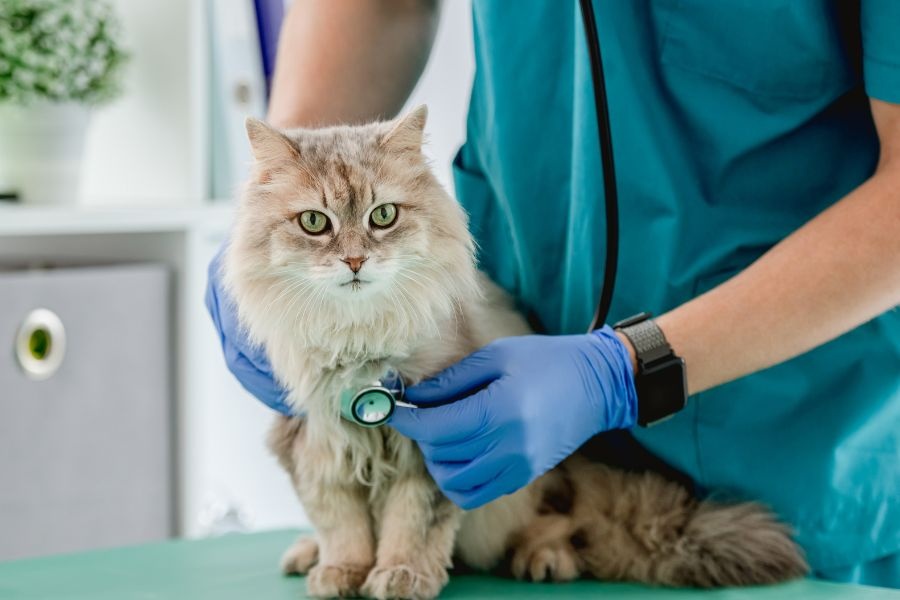
Your veterinarian begins with a full physical examination: checking your cat’s weight and body condition score, examining the eyes, ears, nose, and mouth, palpating the lymph nodes and abdomen, listening to the heart and lungs, assessing the skin and coat, and evaluating muscle mass and joint mobility. Each of these checks has the potential to reveal something that warrants investigation. A heart murmur, an enlarged lymph node, abnormal abdominal organ size, or early dental disease are all findings that a careful physical exam can surface before your cat shows any outward symptoms.
Depending on your cat’s age and history, the visit may also include bloodwork, urinalysis, a fecal parasite screen, blood pressure measurement, and thyroid testing. These diagnostics are where early detection of conditions like kidney disease, hyperthyroidism, diabetes, and anemia becomes possible well ahead of clinical signs. The combination of physical examination and targeted diagnostics is what makes cat wellness and vaccinations appointments so much more valuable than a symptom-driven sick visit.
The Diseases Most Commonly Caught Early at Wellness Visits
Certain feline health conditions are particularly well-suited to early detection through routine wellness care, and they are also conditions where early intervention makes a measurable difference in outcome and quality of life.
Chronic kidney disease is one of the most common conditions in middle-aged and senior cats, and it is almost always identified through bloodwork and urinalysis before a cat shows obvious symptoms. Caught early, dietary management and appropriate medical support can slow progression significantly. Caught late, the options narrow considerably.
Hyperthyroidism, an overactive thyroid gland, is another condition that develops gradually and is often mistaken for normal aging. Weight loss, increased appetite, and elevated energy in an older cat are hallmarks, but the diagnosis is confirmed through a simple blood test. Treatment is highly effective when the condition is identified at a manageable stage.
Dental disease affects the majority of cats over three years old and causes chronic pain that most cats never visibly display. A wellness exam that includes an oral assessment can identify tartar buildup, gum inflammation, and tooth resorption that would otherwise go unaddressed for years. Dental pain affects eating, behavior, and overall quality of life in ways that are often only apparent in retrospect, after treatment, when owners remark on how much more like themselves their cat seems.
Vaccinations: More Than Just a Legal Requirement
The vaccination component of cat wellness and vaccinations appointments is sometimes treated as a checkbox, something to get done and move on from. In fact, vaccination decisions for cats are nuanced and individualized, and a wellness visit is when those decisions are made thoughtfully.
Core vaccines, including those for panleukopenia, feline herpesvirus, calicivirus, and rabies, are recommended for virtually all cats regardless of lifestyle. Non-core vaccines, such as those for feline leukemia virus, are recommended based on your cat’s specific risk factors, including whether they go outdoors or live with other cats of unknown status.
Vaccination schedules also change over time as research on duration of immunity evolves. What was a standard annual protocol a decade ago may now be a three-year schedule for certain vaccines in adult cats. In Indianapolis, where 30th Street Animal Hospital stays current with the latest guidelines from veterinary professional organizations, your cat’s vaccine protocol is reviewed and tailored at each visit rather than automatically repeated.
Building a Health Baseline That Works in Your Cat’s Favor
One of the least discussed but most practical benefits of regular cat wellness and vaccinations visits is the health record they build over time. A single set of bloodwork results is informative. A series of annual results tells a story.
When your veterinarian can compare this year’s kidney values to last year’s and the year before, trends become visible long before absolute numbers cross into the abnormal range. A value that is technically within normal limits but has been rising steadily year over year is clinically meaningful. Without that longitudinal record, it is invisible.
This is especially important in Indianapolis households where cats are with the same veterinary team for years at a time. Continuity of care, built through consistent wellness visits, gives your veterinarian the context to interpret findings accurately and catch changes that a fresh set of eyes would miss entirely.
Conclusion: Early Detection Is the Most Powerful Tool You Have
A healthy-looking cat is not necessarily a healthy cat. The most common serious feline illnesses develop silently, progress gradually, and reveal themselves late. Regular cat wellness and vaccinations appointments are how you close that gap and give your cat the benefit of early detection, proactive management, and a veterinary team that knows them well.
At 30th Street Animal Hospital in Indianapolis, we are proud to be the long-term health partners for cats and the families who love them. Schedule your cat’s wellness visit today and let our team help you stay ahead of whatever your cat’s health may be quietly working on. We are committed to giving every cat the thorough, attentive wellness care they deserve at every stage of life. Book your cat’s appointment today for wellness and vaccination and invest in the early detection that makes all the difference.
Frequently Asked Questions
Q1. How often should my cat have a wellness visit?
Adult cats generally benefit from one wellness visit per year. Senior cats, typically those seven years and older, are best served by twice-yearly visits, since age-related conditions can progress quickly and more frequent monitoring significantly improves the chances of catching changes early. Your veterinarian will recommend the right schedule based on your cat’s age, health history, and lifestyle.
Q2. My cat seems completely healthy. Do cat wellness and vaccinations visits still matter?
Yes, especially for cats. Because cats instinctively hide signs of illness, a healthy appearance is not a reliable indicator of internal health. Many of the most common and serious feline conditions, including kidney disease, hyperthyroidism, and dental disease, develop without obvious symptoms until they are significantly advanced. Wellness visits are specifically designed to detect these conditions before they become visible.
Q3. What bloodwork is typically run at a cat wellness visit?
A standard wellness panel for cats typically includes a complete blood count, a chemistry panel assessing organ function, and a thyroid test for cats over seven. Urinalysis is also commonly included. Your veterinarian may recommend additional testing based on your cat’s age, breed, or previous results. Together, these tests give a detailed picture of your cat’s internal health that a physical exam alone cannot provide.
Q4. Are there vaccines my indoor cat does not need?
Indoor cats still require core vaccines, including panleukopenia, feline herpesvirus, calicivirus, and rabies. Rabies vaccination is required by law in many areas and remains important even for indoor cats, since exposure can occur through escapes, bats entering the home, or other unexpected circumstances. Non-core vaccines for conditions like feline leukemia are evaluated based on your individual cat’s risk factors and lifestyle.
Q5. How do I prepare my cat for a wellness visit at 30th Street Animal Hospital?
Get your cat comfortable with their carrier before the appointment by leaving it out with familiar bedding inside. Withhold food for a few hours before the visit if bloodwork is likely, and bring a list of any supplements, medications, or behavioral changes you have noticed, no matter how minor they seem. The more information you bring, the more complete a picture your veterinary team can build.