Limited-Time September Special: Save $150 on Pet Dental Cleaning + $50 Off Pre-Op Diagnostics

Why Dogs Form Such Strong Emotional Bonds with Humans
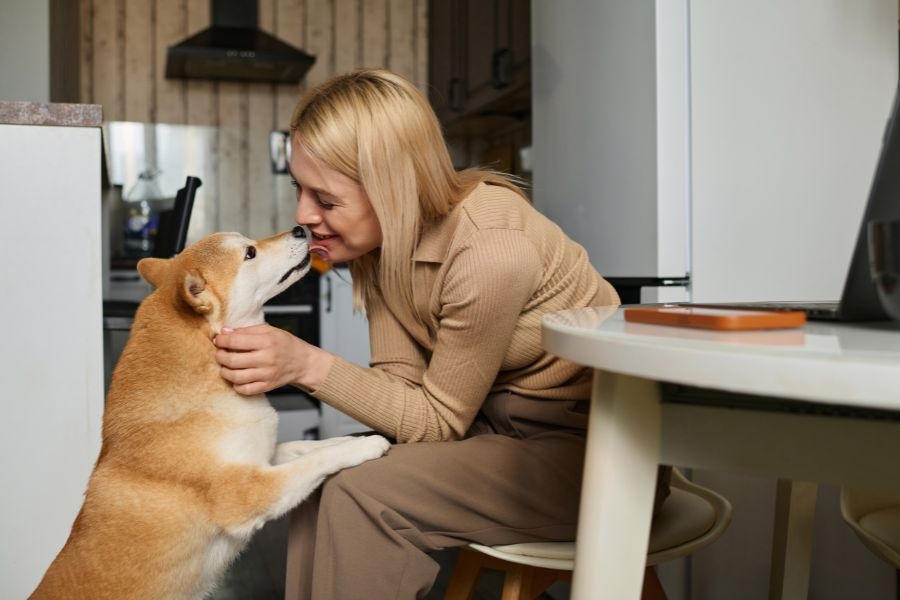
Few relationships in the natural world are as remarkable as the one between dogs and humans. It is ancient, deeply reciprocal, and backed by a growing body of scientific research that reveals just how sophisticated the emotional connection between our species truly is. Understanding the science behind the dogs and human relationship does more than satisfy curiosity. It helps us become better, more attuned companions to the animals who share our lives. At 30th Street Animal Hospital in Indianapolis, we believe that understanding your dog more deeply is one of the most meaningful investments you can make in their wellbeing.
A Bond Shaped by Thousands of Years of Co-Evolution
The relationship between dogs and humans did not begin with Instagram reels and dog parks. It has been building for somewhere between 15,000 and 40,000 years, depending on which archaeological and genetic evidence you consult. Dogs are the only large carnivore humans ever successfully domesticated, and that domestication was not a one-sided process. Dogs evolved alongside us, and in doing so, they developed cognitive and emotional tools specifically suited to reading and responding to human behavior.
This is the key distinction between dogs and other domesticated animals. Wolves, from which dogs descend, do not show the same attunement to human cues even when raised by people from birth. Dogs, by contrast, are uniquely wired to follow human pointing gestures, make eye contact with people in ways that other animals rarely do, and seek out human faces when confronted with problems they cannot solve on their own. These are not learned tricks. They are the result of thousands of generations of selection for social compatibility with humans.
The result is an animal that does not merely tolerate human company but genuinely seeks it, finds comfort in it, and is measurably stressed by prolonged separation from it. The dogs and human relationship is, in a very real biological sense, a mutual attachment.
The Oxytocin Loop: How Eye Contact Creates a Chemical Bond
One of the most compelling pieces of science behind the human-dog bond involves oxytocin, a hormone associated with trust, bonding, and social connection in mammals. In humans, oxytocin is released during moments of physical closeness with loved ones, including our children, partners, and close friends.
Research published in Science in 2015 by Japanese researchers Miho Nagasawa and colleagues found that when dogs and their owners gaze into each other’s eyes, both species experience a rise in oxytocin levels. The longer the mutual gaze, the larger the increase. Wolves, even those raised by humans, did not show this response. The finding suggests that dogs have essentially hijacked the same neural bonding pathway that human infants use to bond with their caregivers, a remarkable piece of convergent evolution.
This means that when your dog looks at you, something genuinely biological is happening in both of you. It is not projection or wishful thinking. The dogs and human relationship, at the neurochemical level, has real structural similarities to the parent-child bond. That is a remarkable thing.
Dogs Read Human Emotions with Surprising Accuracy
Beyond oxytocin, dogs demonstrate a capacity for reading human emotional states that goes well beyond what most owners consciously recognize. Studies have shown that dogs can distinguish between happy and angry human facial expressions, even in photographs of faces they have never seen before. They can identify stress in human voices and respond to it with behavioral changes. They are sensitive to subtle shifts in their owner’s posture, breathing rate, and movement patterns.
This emotional attunement is part of why dogs are so effective as therapy and support animals. A dog does not need to be trained to notice that their person is having a hard day. They pick it up automatically, from a combination of olfactory cues, including changes in cortisol levels that they can smell, and visual and auditory information they have learned to associate with human emotional states.
In Indianapolis, where 30th Street Animal Hospital serves a wide range of dog owners and their companions, our veterinary team regularly sees the effects of this attunement in both directions. Dogs who live with anxious owners often show signs of chronic stress themselves. Dogs whose owners model calm, confident energy tend to display it too. The emotional exchange in the dogs and human relationship is not a one-way street.
Attachment Theory and What It Means for Your Dog
Developmental psychologists use a framework called attachment theory to describe the deep emotional bonds that form between infants and caregivers. Research in animal behavior has increasingly applied this same framework to dogs and their owners, with results that are striking.
Studies using the “Strange Situation” test, originally designed to assess attachment in human infants, have found that dogs display all four classic attachment behaviors with their primary human caregivers. They use their owner as a secure base from which to explore. They show distress when the owner leaves. They seek comfort from the owner upon return. They are not easily soothed by a stranger in the owner’s absence. These are the hallmarks of a secure attachment bond, the same kind that healthy human children form with their parents.
What this means practically is that your dog is not just happy to see you because you bring food. The bond they have with you functions as a genuine emotional anchor in their world. Your presence, your voice, and your attention are intrinsically meaningful to your dog in ways that have nothing to do with treats or rewards.
How Understanding the Bond Makes You a Better Dog Owner
Recognizing the depth of the dogs and human relationship changes how you interpret your dog’s behavior. Separation anxiety is not a training failure or a personality flaw. It is the predictable response of an animal with a genuine attachment bond to a painful separation. Velcro behavior, where a dog follows their owner from room to room, is not neediness. It is proximity-seeking, a behavior that is adaptive and normal in attached animals.
It also means that the quality of your emotional engagement with your dog matters. Dogs are not neutral to your mood, your stress, or your presence. Time spent calmly together, whether on a walk, resting side by side, or during a training session, contributes meaningfully to your dog’s emotional health and to the strength of the bond between you.
Conclusion: A Relationship Worth Understanding and Nurturing
The dogs and human relationship is not just a cultural phenomenon or a matter of personal sentiment. It is a scientifically documented, biologically grounded bond that has shaped both species over millennia. Understanding it helps you meet your dog’s emotional needs more effectively, interpret their behavior more accurately, and appreciate the remarkable nature of the connection you share.
At 30th Street Animal Hospital in Indianapolis, we are here to support that relationship at every stage of your dog’s life. Schedule your dog’s wellness visit today and let our team help you give your dog the health, care, and understanding they deserve. We are committed to supporting the deep bond between dogs and their people through compassionate, expert veterinary care. Book your dog’s appointment today and give your companion the attention they deserve.
Frequently Asked Questions
Q1. Is the emotional bond between dogs and humans scientifically proven?
Yes. Research across multiple disciplines, including behavioral science, neuroscience, and evolutionary biology, has documented that dogs form genuine attachment bonds with their human caregivers. Studies measuring oxytocin levels, attachment behaviors, and emotional attunement all point to the same conclusion: the dogs and human relationship has real biological underpinnings, not just cultural ones.
Q2. Do all dogs bond equally strongly with their owners?
Bonding capacity varies by individual dog, breed tendencies, early life experiences, and the quality and consistency of the relationship with the owner. Dogs that experienced early neglect, abuse, or insufficient socialization may form bonds more cautiously. However, with patience and consistent positive interaction, most dogs are capable of forming a strong and trusting relationship with a caring owner.
Q3. Can my dog tell when I am stressed or sad?
Research strongly suggests yes. Dogs are sensitive to changes in human cortisol levels, which they can detect through smell, as well as changes in facial expression, posture, voice tone, and behavior. Many dog owners report that their dog behaves differently when they are unwell or emotionally distressed, and this observation is supported by the science.
Q4. How does understanding the human-dog bond help with behavioral issues?
Many common behavioral issues in dogs, including separation anxiety, excessive barking, and destructive behavior, make more sense when understood through the lens of attachment. Recognizing that your dog is not being bad but is responding to the stress of separation or an unmet need for connection changes the approach from punishment to support, which is both more effective and more humane.
Q5. How can I strengthen the bond with my dog in Indianapolis?
Consistent daily routines, shared calm activities like walks and quiet time together, positive reinforcement training, and attentive handling all strengthen the human-dog bond. Regular veterinary visits at 30th Street Animal Hospital also contribute, because a dog in good physical health is better able to engage emotionally, play, and connect with the people they love.